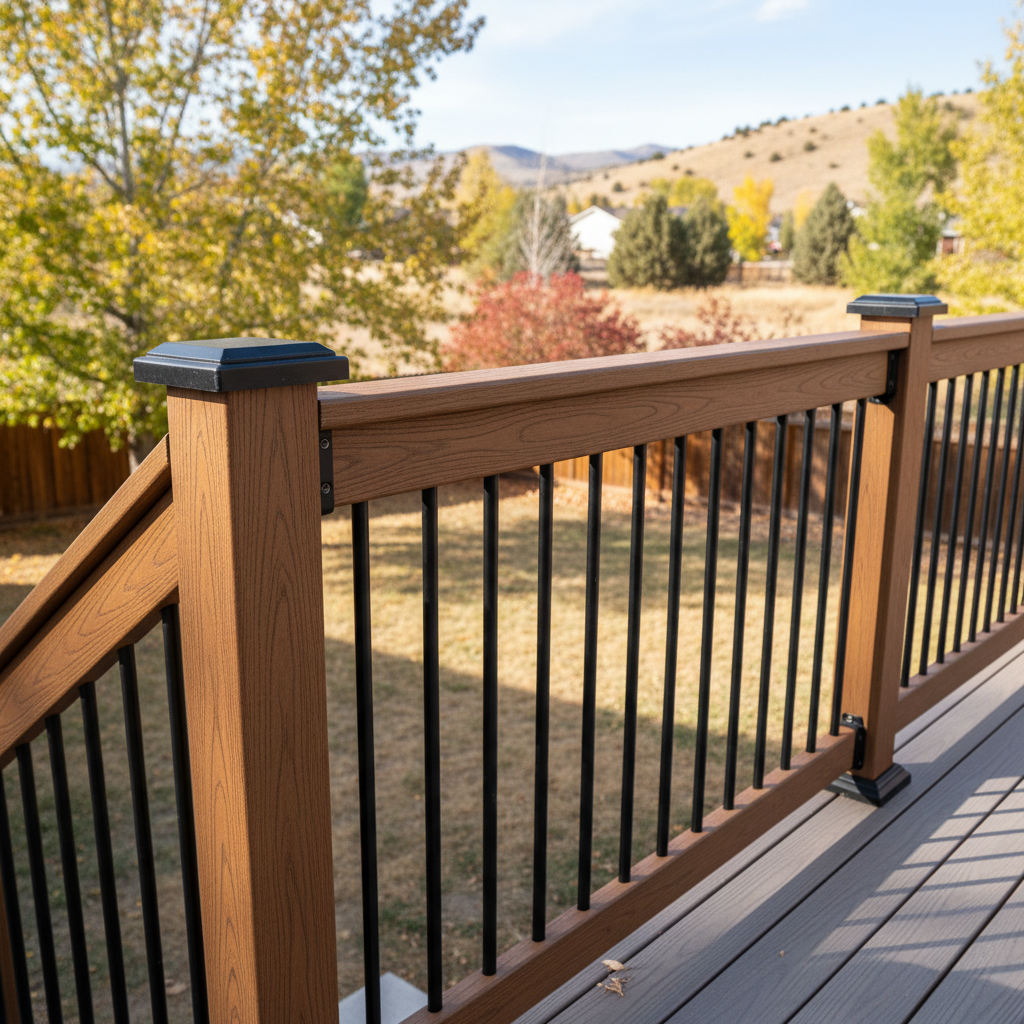
What are my best options for deck railing materials?
Alright, let's talk materials. This is usually the first thing folks ask me about, and for good reason. What you pick here affects everything: how much maintenance you'll do, how long your railing lasts, and, of course, how it looks.
Pressure-Treated Wood: This is the classic choice, and it's often the most budget-friendly upfront. It's strong, you can stain or paint it any color, and it's pretty versatile. The downside? It needs regular maintenance – cleaning, staining, or painting every few years – to keep it from rotting, splintering, or fading. If you're okay with that upkeep, it's a solid choice.
Composite: Think of composite as wood's low-maintenance cousin. It's usually a mix of wood fibers and plastic, so it resists rot, insects, and fading a lot better than natural wood. You won't be staining or painting this stuff, which is nice. It costs more initially, but you save on maintenance time and materials down the road. The color options are usually a bit more limited than paint, but they're pretty good these days.
Aluminum: This is a fantastic option if you want something sleek, modern, and practically maintenance-free. Aluminum railings are lightweight but incredibly strong. They won't rust, rot, or warp, and they come in various powder-coated finishes that hold up really well. They're usually more expensive than wood or composite, but the longevity and zero fuss make them worth it for a lot of homeowners.
Vinyl/PVC: Similar to composite in its low-maintenance appeal, vinyl railings are also rot-proof and don't need painting. They tend to come in fewer color options, usually white or tan, and can sometimes look a bit more 'plastic-y' than other materials. Still, they're a good middle-ground option for durability and ease of care.
Cable Railing: This is more of a style than a material type, often paired with wood, composite, or aluminum posts. It uses thin stainless steel cables run horizontally or vertically. It's super modern and offers amazing, unobstructed views – which is great if you've got a nice view of the Wasatch Front. It's definitely on the higher end of the cost spectrum, and installation is a bit more specialized.
How high do my deck railings need to be in Clearfield?
This isn't just about how it looks; it's a safety thing, and local building codes dictate it. For most residential decks in Clearfield, if your deck surface is 30 inches or more above the ground, you're required to have a guardrail that's at least 36 inches high, measured from the deck surface to the top of the rail. Now, if your deck is attached to a commercial property or a multi-family dwelling, that height requirement usually jumps to 42 inches. Always double-check with the Clearfield City Building Department, because codes can get updated, and you really don't want to fail an inspection.
What's the deal with baluster spacing?
Another critical safety code. The rule of thumb, and what the code typically says, is that a 4-inch sphere shouldn't be able to pass through any opening in your railing system. This applies to the space between your balusters (those vertical pickets), but also any gaps between the deck surface and the bottom rail, or between horizontal rails. This is to prevent small children or pets from slipping through. I've seen folks try to eyeball this, and it's just not worth the risk, honestly. We always use a 4-inch spacer during installation to make sure everything's up to snuff.
Do I need a permit for deck railing installation?
Generally, if you're just replacing existing railings with new ones of the same type and height, you might not need a full building permit. However, if you're building a new deck, adding railings to an existing deck that didn't have them, or making significant structural changes to your deck that involve the railings, then yes, you'll almost certainly need one. It's always best to call the Clearfield City Building Department before you start any work. They'll tell you exactly what's required for your specific project. Trust me, getting a permit after the fact is a headache you don't want.
How long does railing installation usually take?
This really depends on a few things: the size of your deck, the complexity of the railing design, and the material you choose. A simple wood railing on a standard rectangular deck might only take a day or two for my crew. If you've got a large, multi-level deck with lots of angles and you're going for something like a cable railing system, that could easily be three to five days, sometimes more. We always give you a clear timeline upfront once we've seen the project. Weather can also play a role, especially during our Clearfield winters or spring rains, but we plan for that.
Can I install deck railings myself, or should I hire a pro?
Look, I'm a contractor, so you know what I'm going to say. But honestly, this isn't just about getting work for Mighty Deck Co. Installing deck railings correctly is about safety. If they're not installed right, they won't meet code, and more importantly, they won't protect anyone. There are specific structural requirements for posts, proper fastening methods, and those precise spacing rules we talked about. If you're handy and have experience with construction, sure, you *could* try it. But for most homeowners, especially with the liability involved, hiring a professional deck builder who knows the codes and has the right tools and experience is usually the smarter, safer bet. We ensure it's done right the first time, passes inspection, and keeps your family safe for years to come.
What kind of maintenance will my new railings need?
This goes back to your material choice. If you pick pressure-treated wood, you'll be looking at cleaning and re-staining or painting every 2-4 years, depending on how much sun and weather exposure it gets. Composite, aluminum, and vinyl are the low-maintenance champs. A good wash with soap and water once or twice a year is usually all they need to keep them looking good. You might want to check fasteners on any railing type annually, just to make sure nothing's come loose from expansion and contraction, especially after our hot summers and cold winters here in Utah.
What about lighting for my deck railings?
Deck lighting isn't just for looks; it's a big safety feature, especially if you use your deck at night. You've got a few options for integrating lighting into your railings. We can install LED post cap lights that shine down, or small strip lights under the top rail that illuminate the deck surface. There are even tiny lights that can be recessed directly into the posts or balusters. Most of these are low-voltage, so they're safe and energy-efficient. It really adds to the ambiance and makes your deck much more usable after dark, plus it helps prevent trips and falls. It's definitely something worth considering during the planning stage.