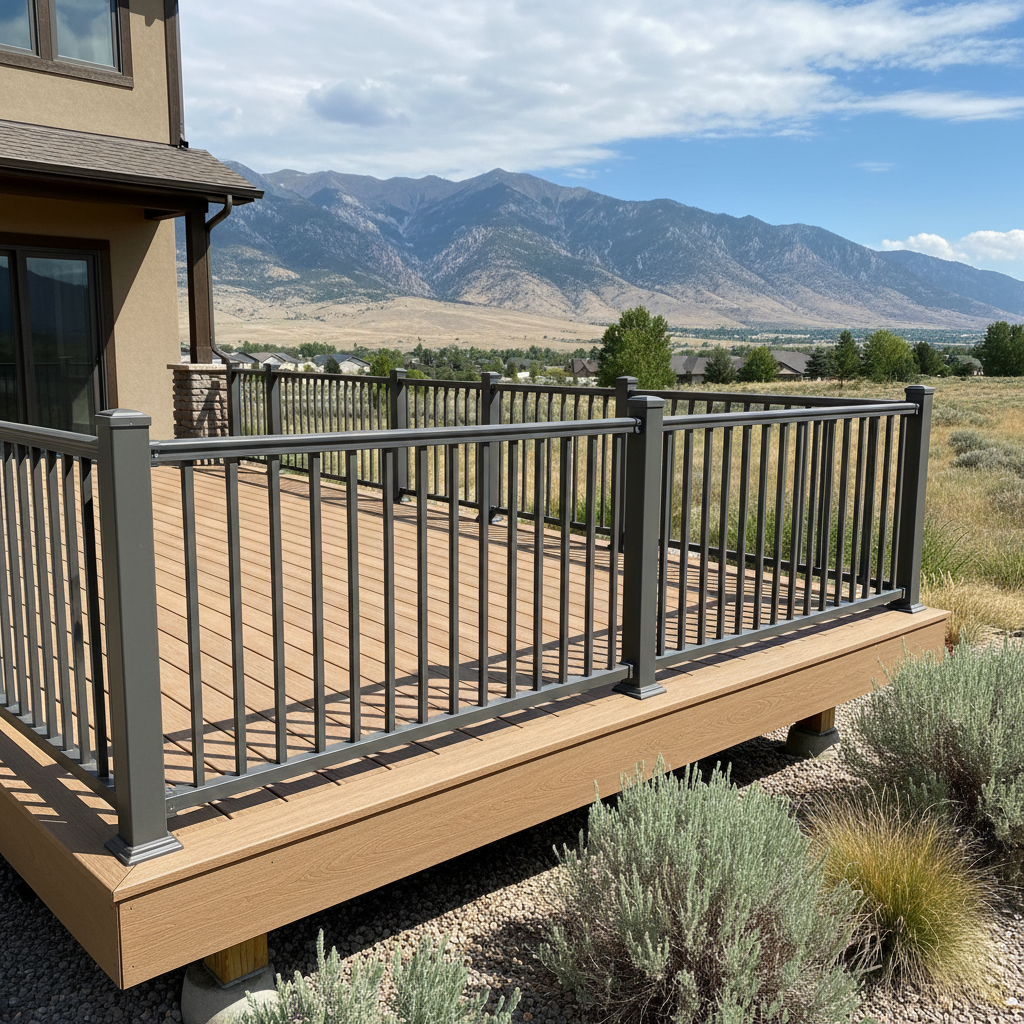
You've got a deck, and maybe you're thinking about upgrading the railings, or you're building a new one and need to get those railings right. It seems straightforward, doesn't it? Pick a style, get a quote, install. But I've seen folks in Clearfield make some pretty big blunders when it comes to deck railings, and those mistakes can cost you a lot of money, headaches, or worse, compromise safety. Let's talk about what to watch out for.
Mistake #1: Not Knowing Your Local Building Codes
This is a big one, and it's probably the most common mistake I see. People assume all railings are created equal, or that what their neighbor has is fine for them. Not true. Clearfield, like any city, has specific building codes for deck railings. We're talking about things like minimum height requirements (usually 36 inches for decks under 30 inches high, and 42 inches for decks over 30 inches high, but always double-check), spacing between balusters (typically no more than 4 inches, so a 4-inch sphere can't pass through), and how much force the railing needs to withstand.
If you hire someone who doesn't know these codes, or you try to DIY without checking, you could end up with a railing that doesn't pass inspection. Then you're tearing it out and starting over, which is a massive waste of time and money. Always ask your contractor if they're familiar with Clearfield's specific codes and if they'll pull the necessary permits. If they hem and haw, that's a red flag.
Mistake #2: Focusing Only on Price (and Ignoring Value)
I get it, everyone wants a good deal. But when you're talking about something as critical as a deck railing – which is there for safety and longevity – going for the absolute cheapest option almost always bites you in the end. A super low bid might mean a contractor is cutting corners on materials, using inexperienced labor, or isn't properly insured. We've seen some pretty shoddy work from folks who underbid just to get the job.
Think about the long-term. A cheap wood railing might look okay now, but how will it hold up to our Clearfield winters, with all that snow and then the hot sun? You'll be sanding, staining, and repairing it every few years. Investing a bit more in a quality composite, aluminum, or even a well-installed vinyl railing can save you a ton in maintenance and replacement costs down the road. Mighty Deck Co. always talks through the value proposition of different materials, not just the upfront cost.
Mistake #3: Neglecting Material Compatibility and Maintenance
This goes hand-in-hand with the price issue. Homeowners often pick a railing material based purely on looks or initial cost without considering how it will interact with their existing deck or the maintenance it requires. For instance, if you have a pressure-treated wood deck, putting certain types of metal railings directly on it without proper isolation can lead to corrosion over time. Galvanic corrosion is real, especially with the moisture we get.
Also, be honest with yourself about how much upkeep you're willing to do. If you hate painting, don't get a wood railing that needs regular staining. If you want something truly set-it-and-forget-it, look at powder-coated aluminum or high-quality vinyl. Even composite railings need occasional cleaning. Don't let a salesperson tell you something is